
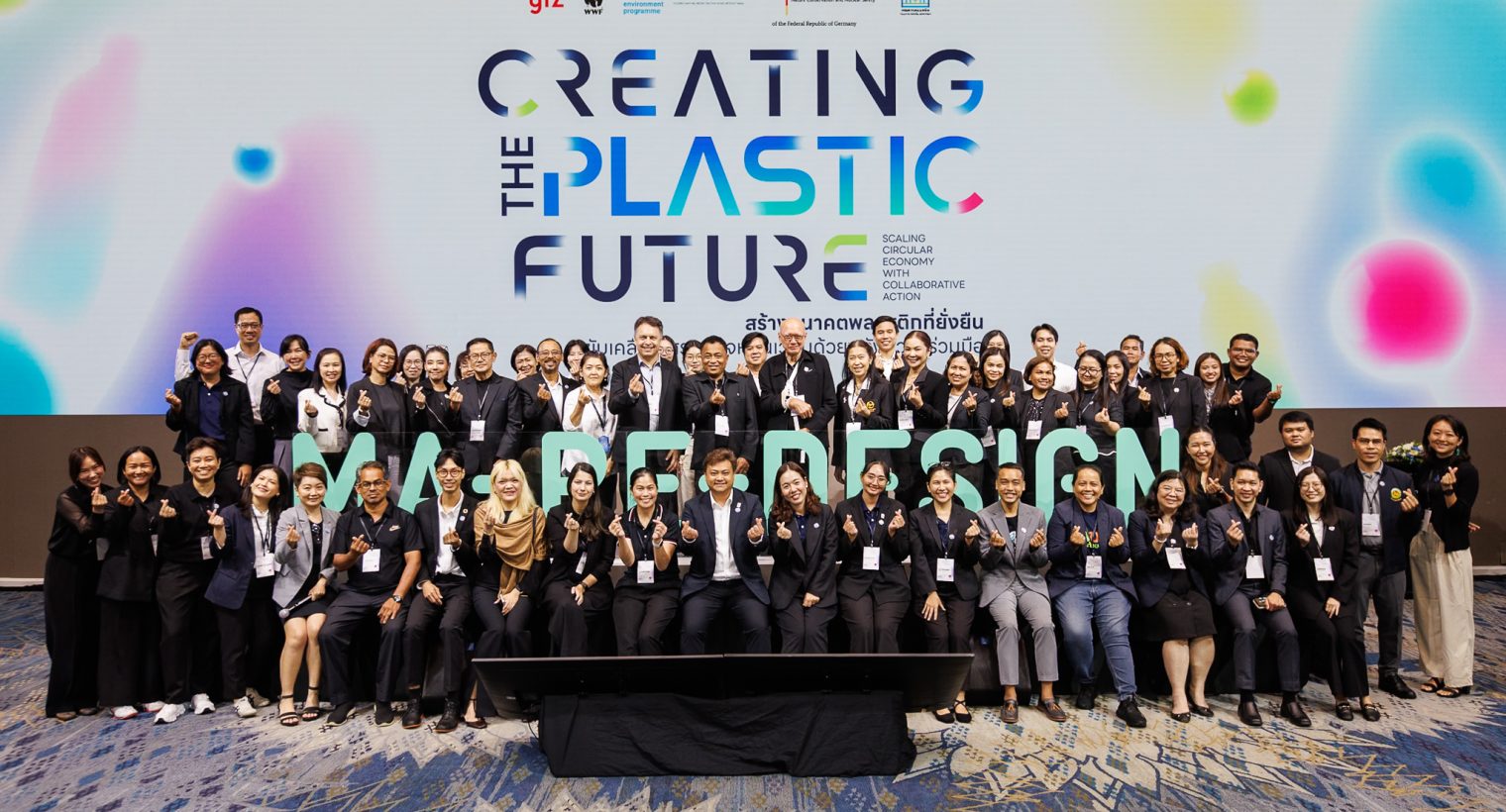
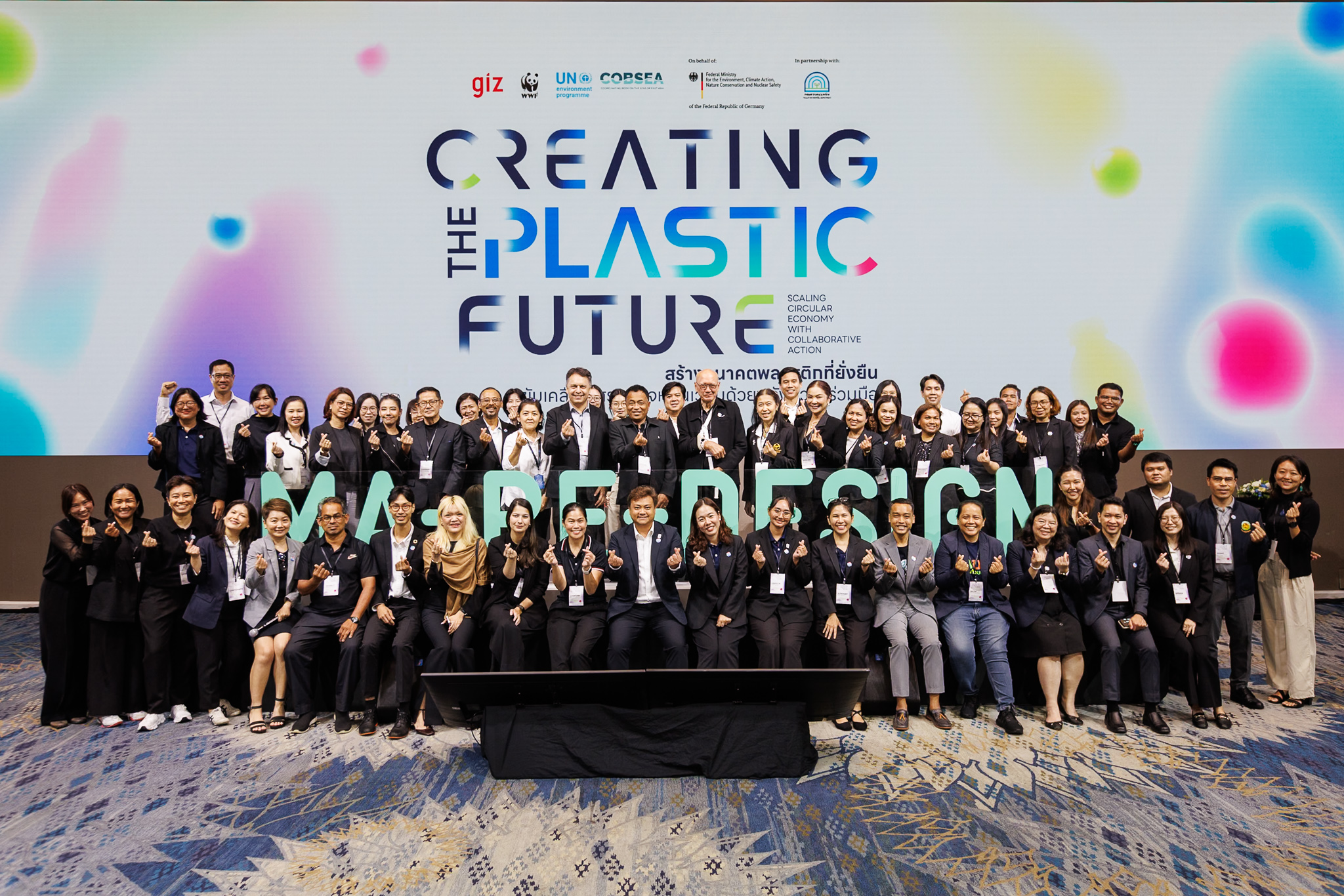
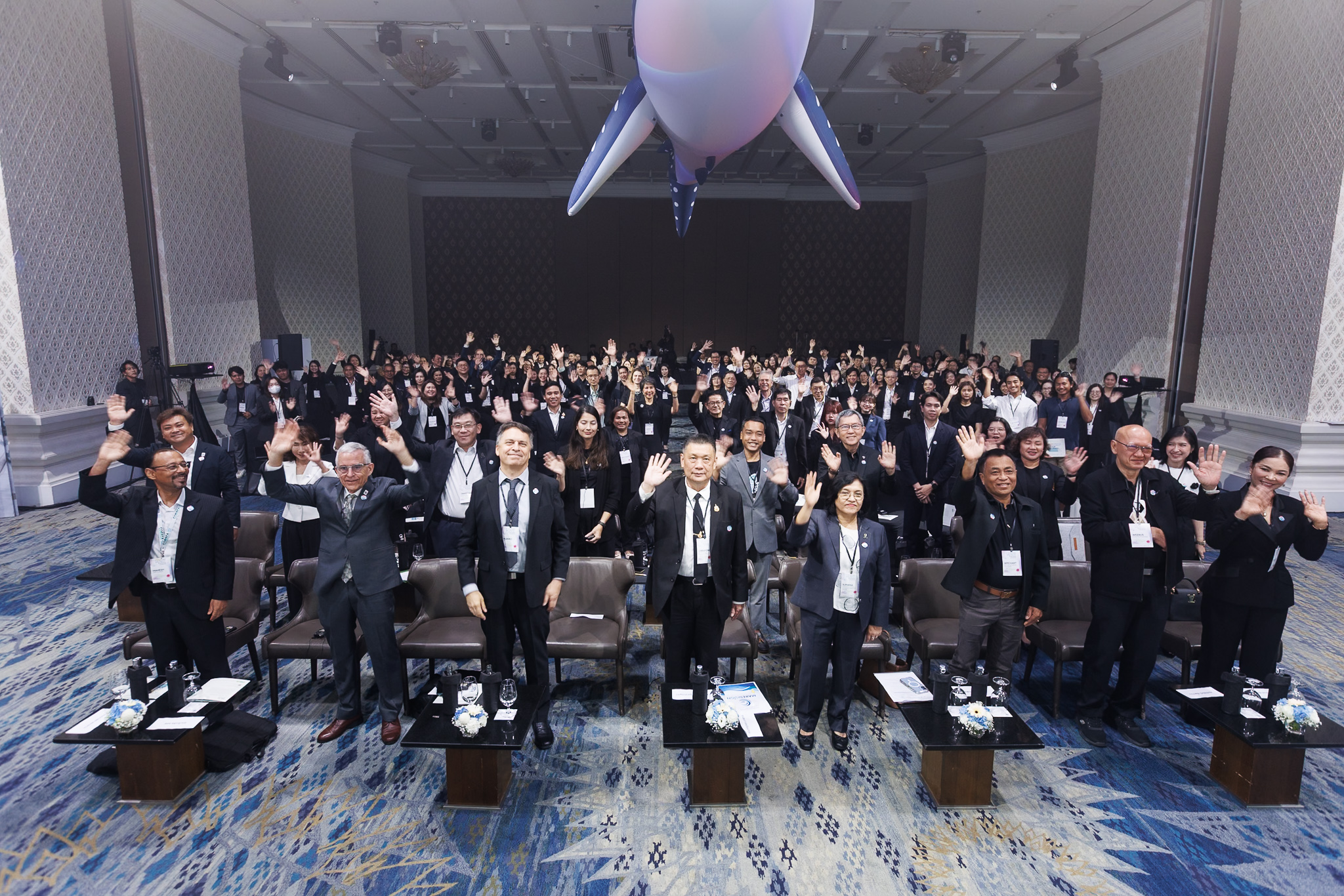
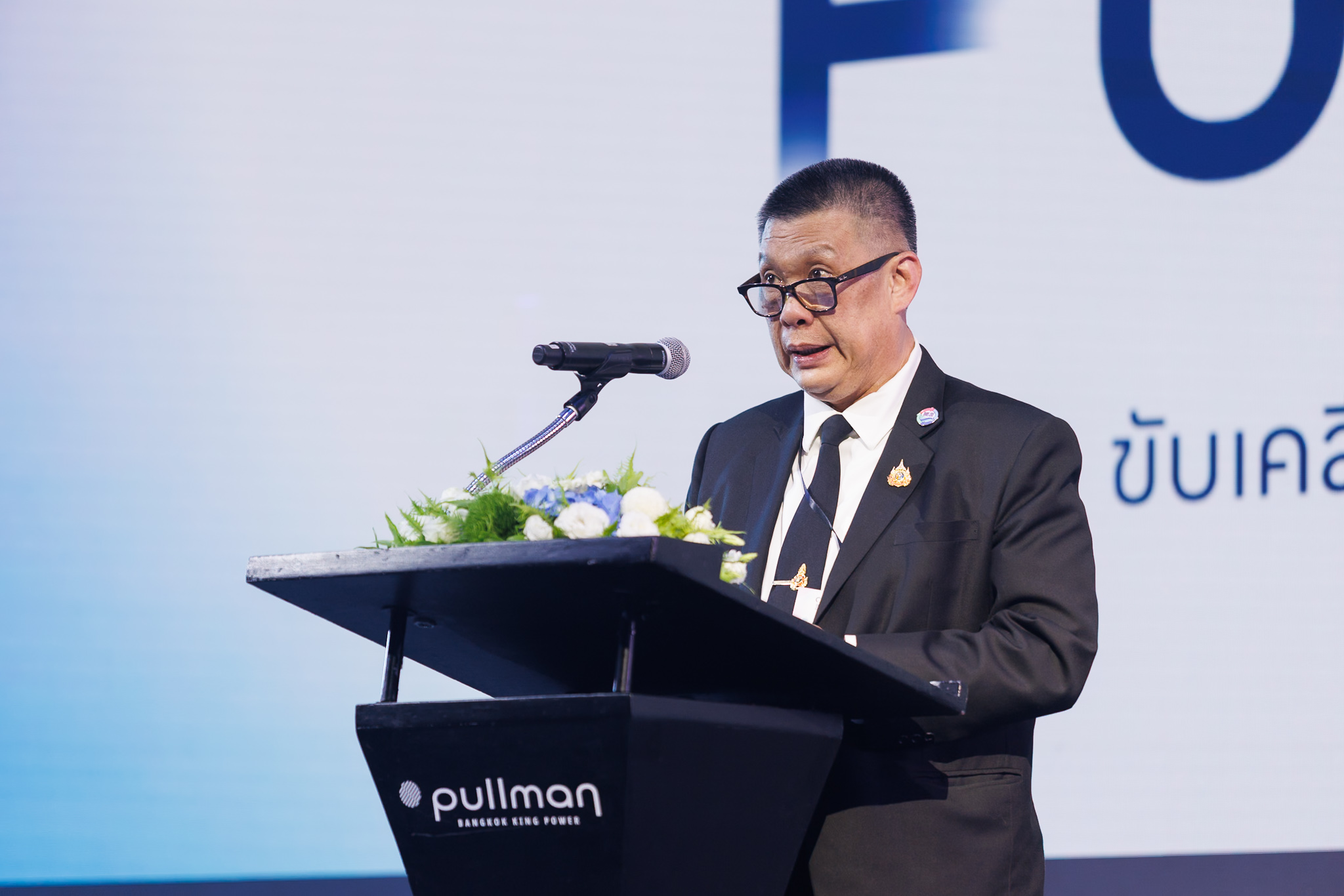
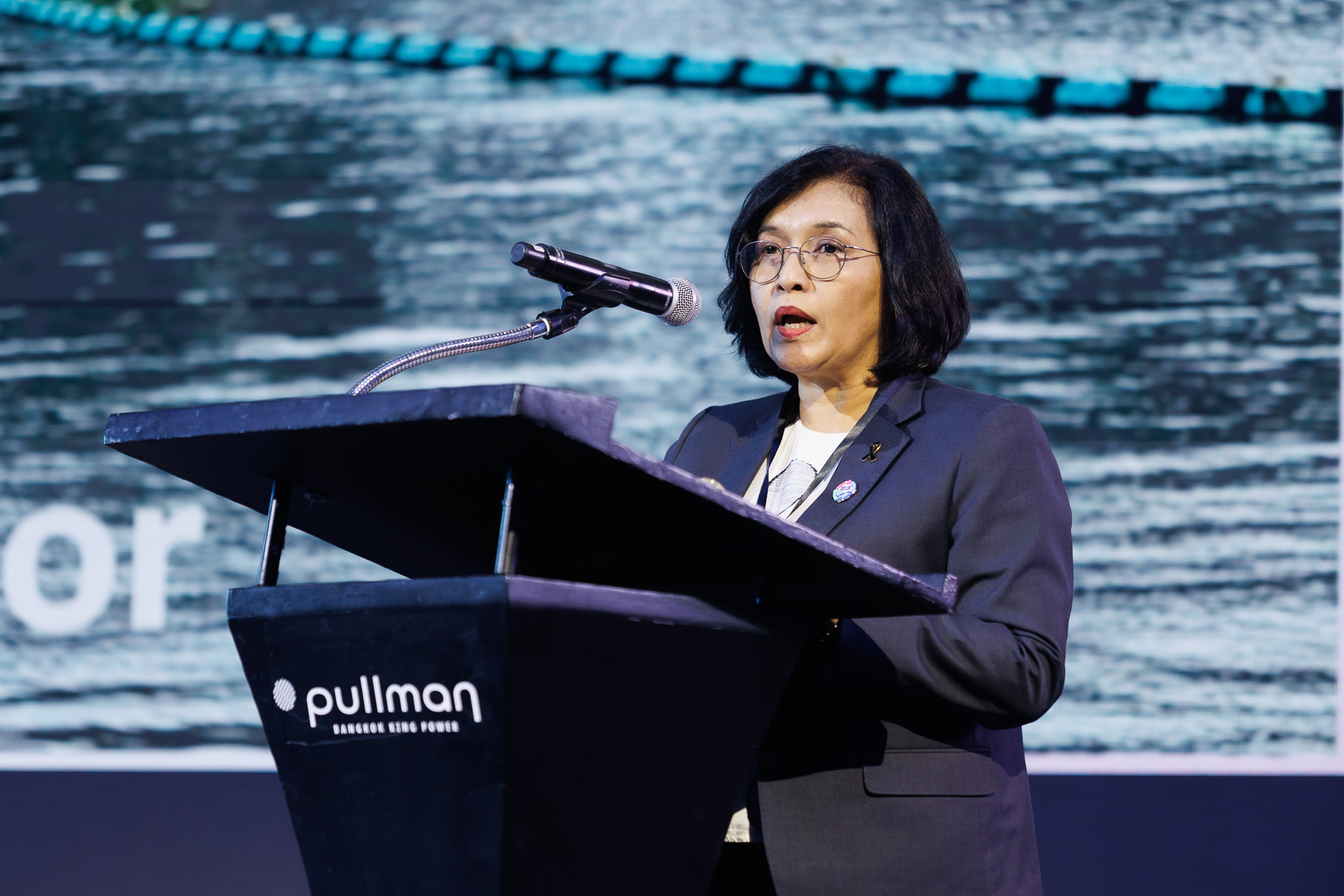
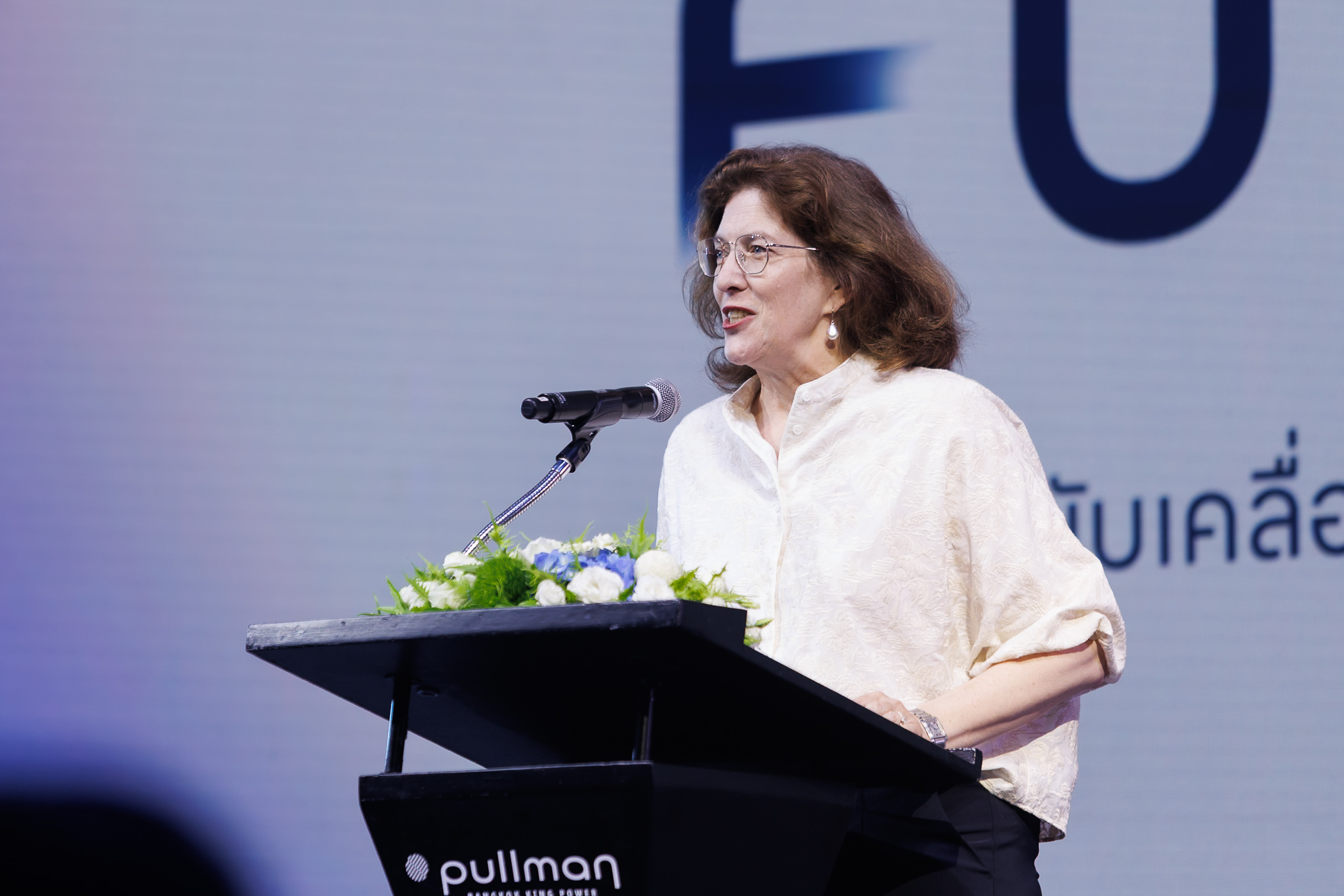
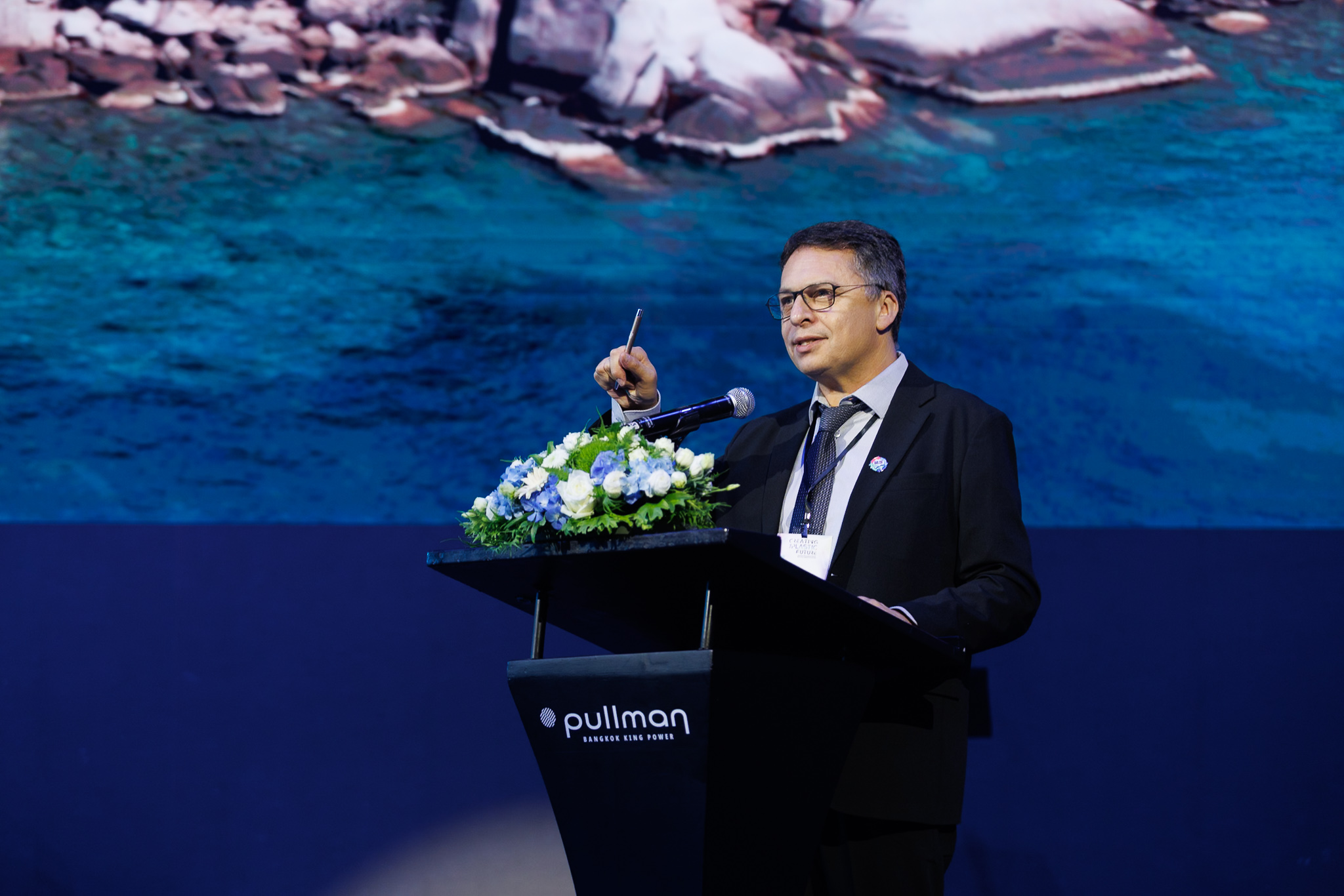
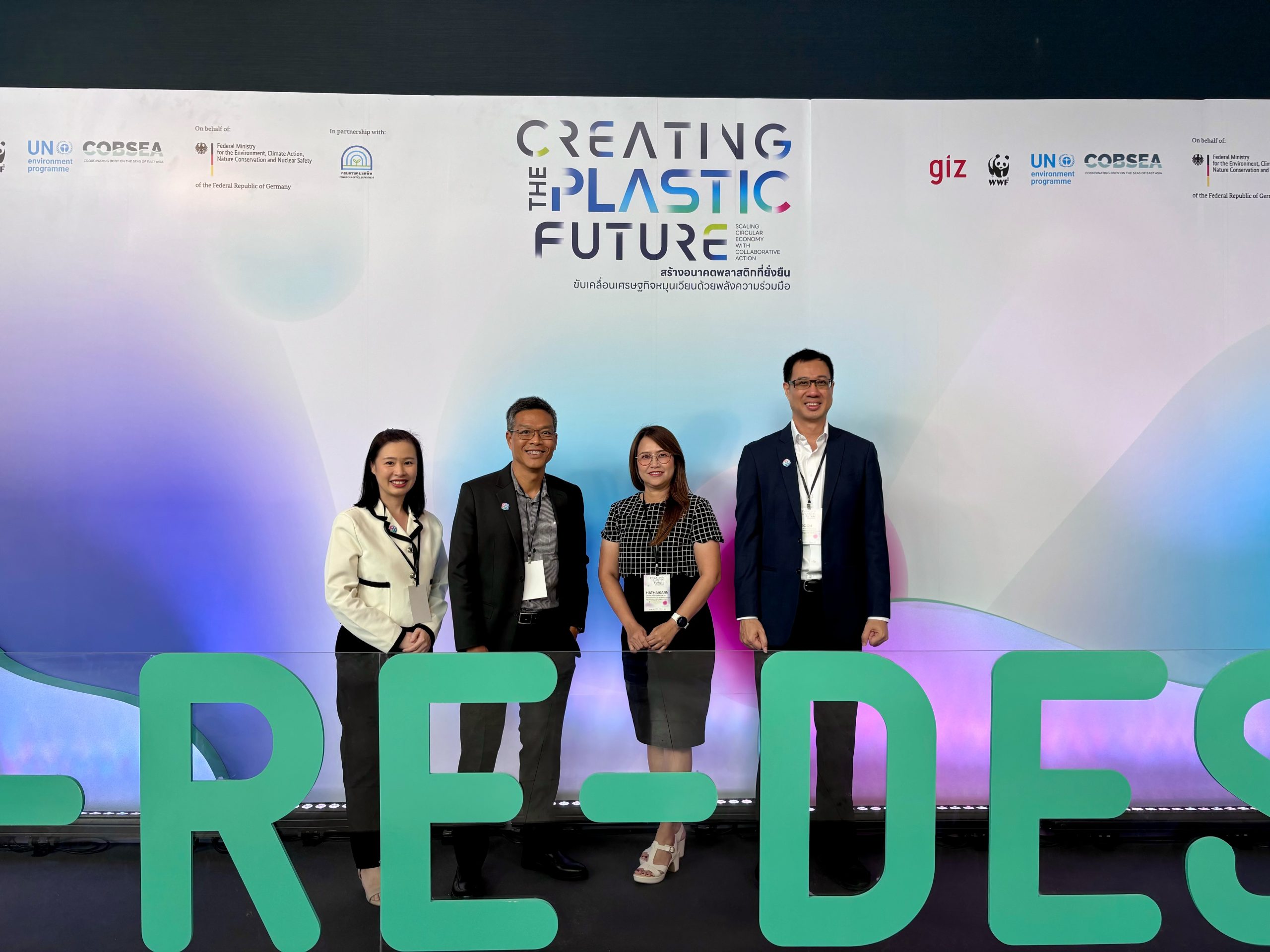
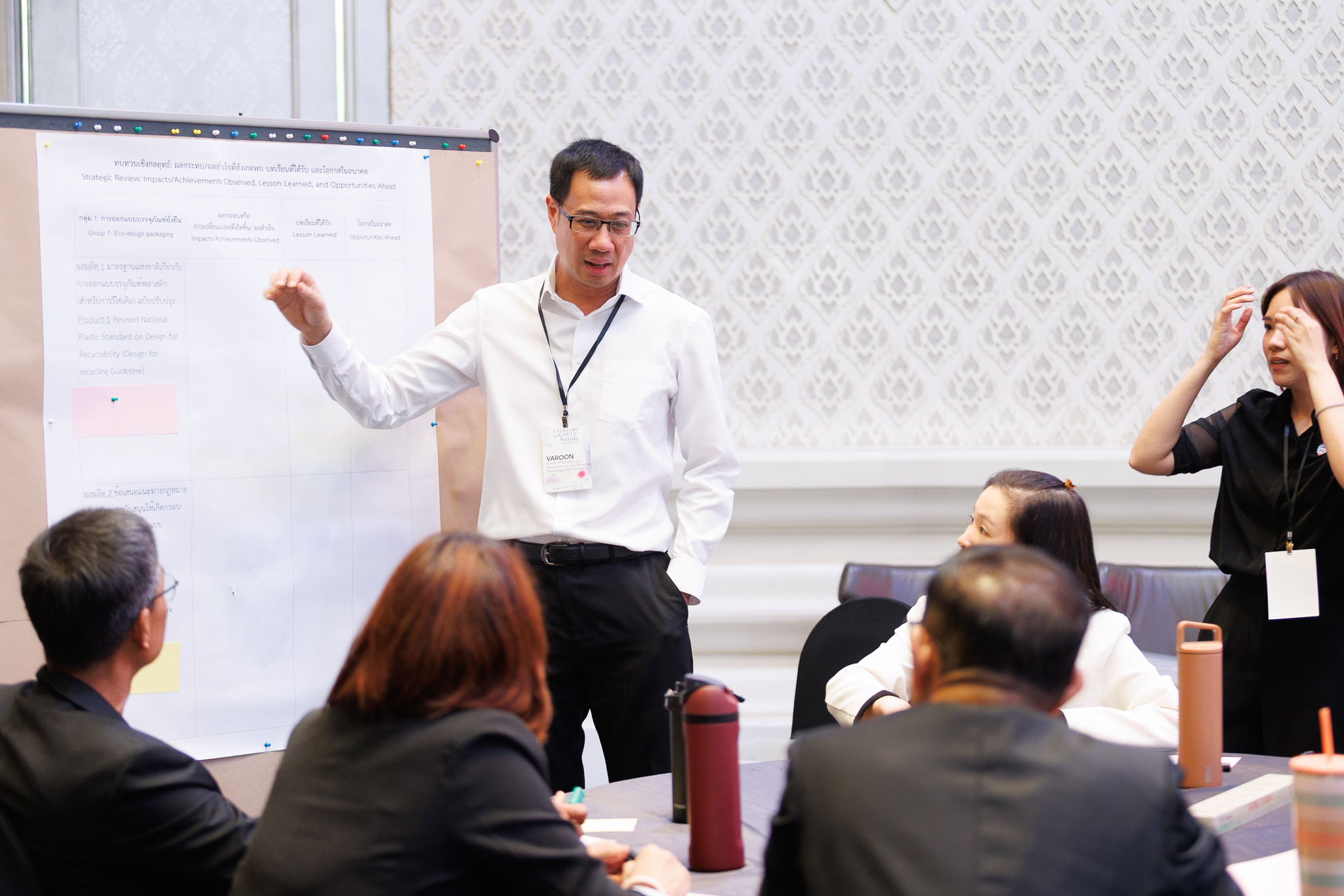
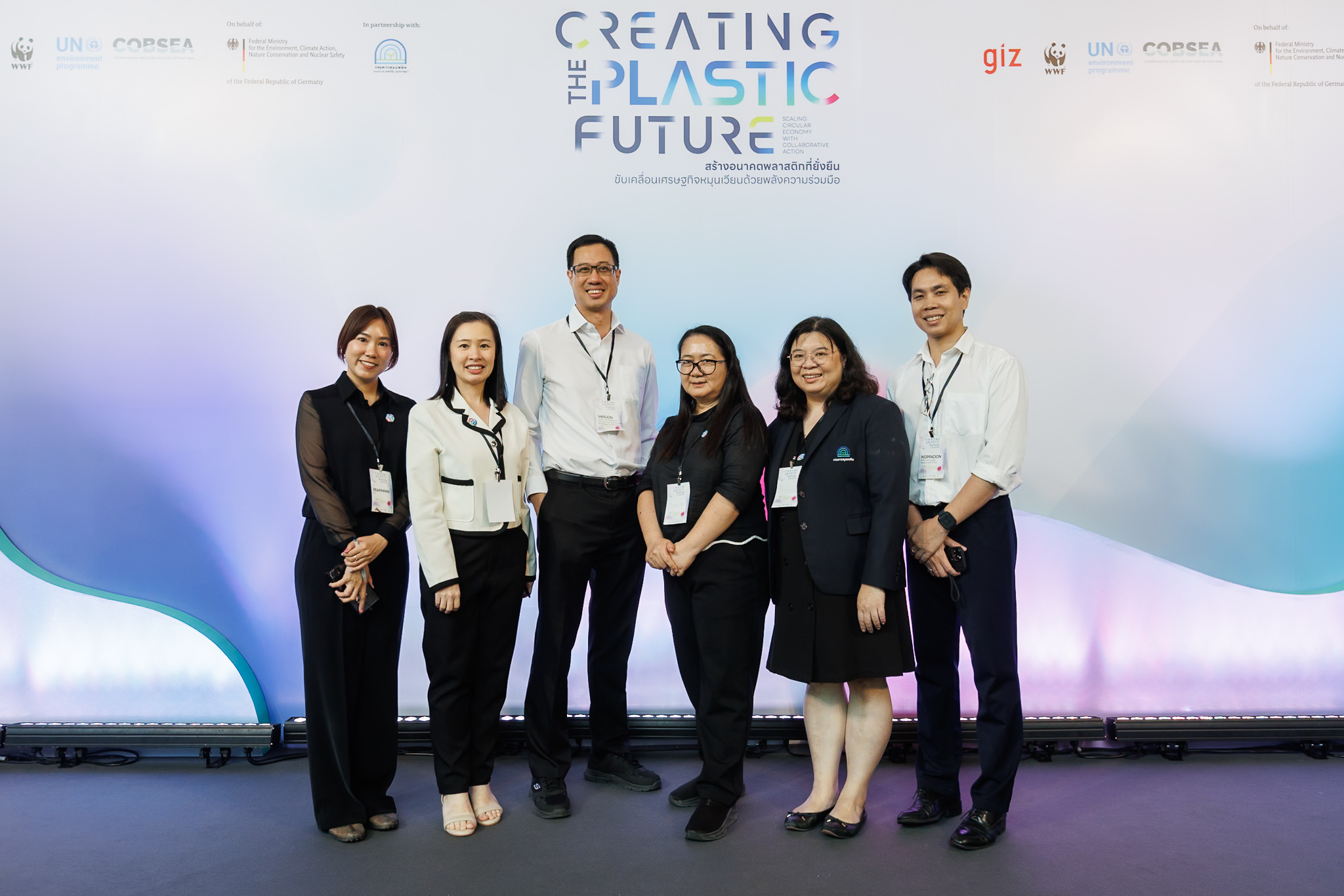
At the closing event of the four-year MA-RE-DESIGN project, “Creating the Plastic Future: Scaling Circular Economy with Collaborative Actions,” held on June 25, 2026, at Pullman Bangkok King Power Hotel, Prof. Hathaikarn Manuspiya, Mr. Varoon Varanyanond, and Ms. Nusara Jariyasakoonroj joined stakeholders from the government, academia, the private sector, international organizations, NGOs, and local communities to celebrate MA-RE-DESIGN’s achievements in advancing circular economy approaches to sustainable packaging while reaffirming continued collaboration beyond the project’s completion.
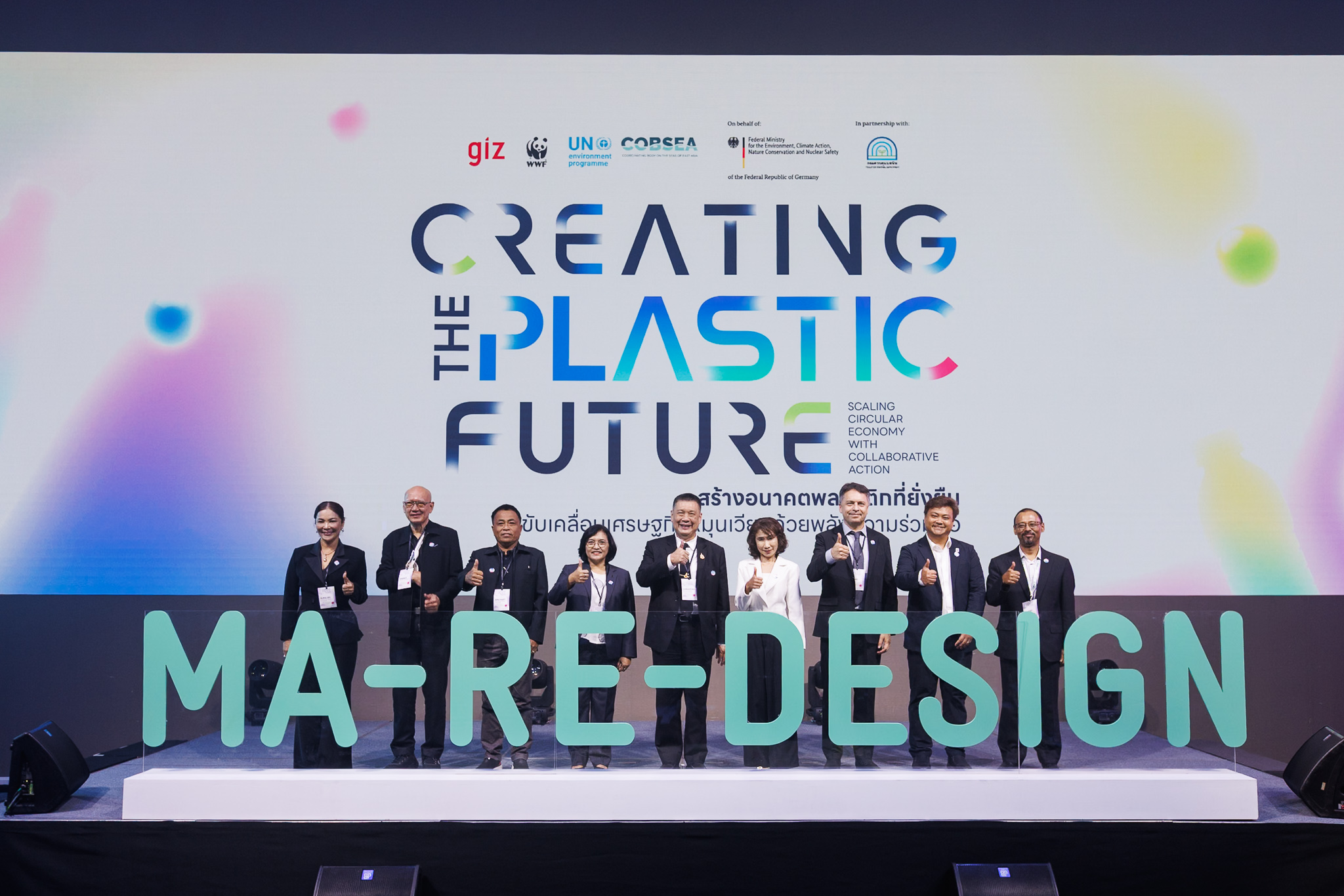
Led by GIZ Thailand in partnership with Thailand’s Pollution Control Department, WWF Thailand, and UNEP COBSEA, the MA-RE-DESIGN project aimed to reduce plastic leakage into the marine environment by advancing sustainable plastic packaging management through circular economy approaches—from eco-design and responsible production to regenerative recycling and policy development.
Through MA-RE-DESIGN, PETROMAT and HubSustainMat launched the “Eco-Design Innovation Award” to encourage Thai students, startups, SMEs, and the general public to develop sustainable packaging solutions based on Design for Recycling (D4R) principles and Carbon Footprint of Products (CFP) reduction strategies. Participants applied strategies such as mono-material packaging, reusable formats, and post-consumer recycled plastics to improve packaging sustainability throughout its life cycle, from design to end-of-life.
Among the six winners selected from 113 applicants, Assoc. Prof. Tatiya Trongsatitkul of Suranaree University of Technology won the award with “K-dle,” a sustainable alternative to single-use plastic foam fruit nets that showcases sustainable material innovation for a circular economy.
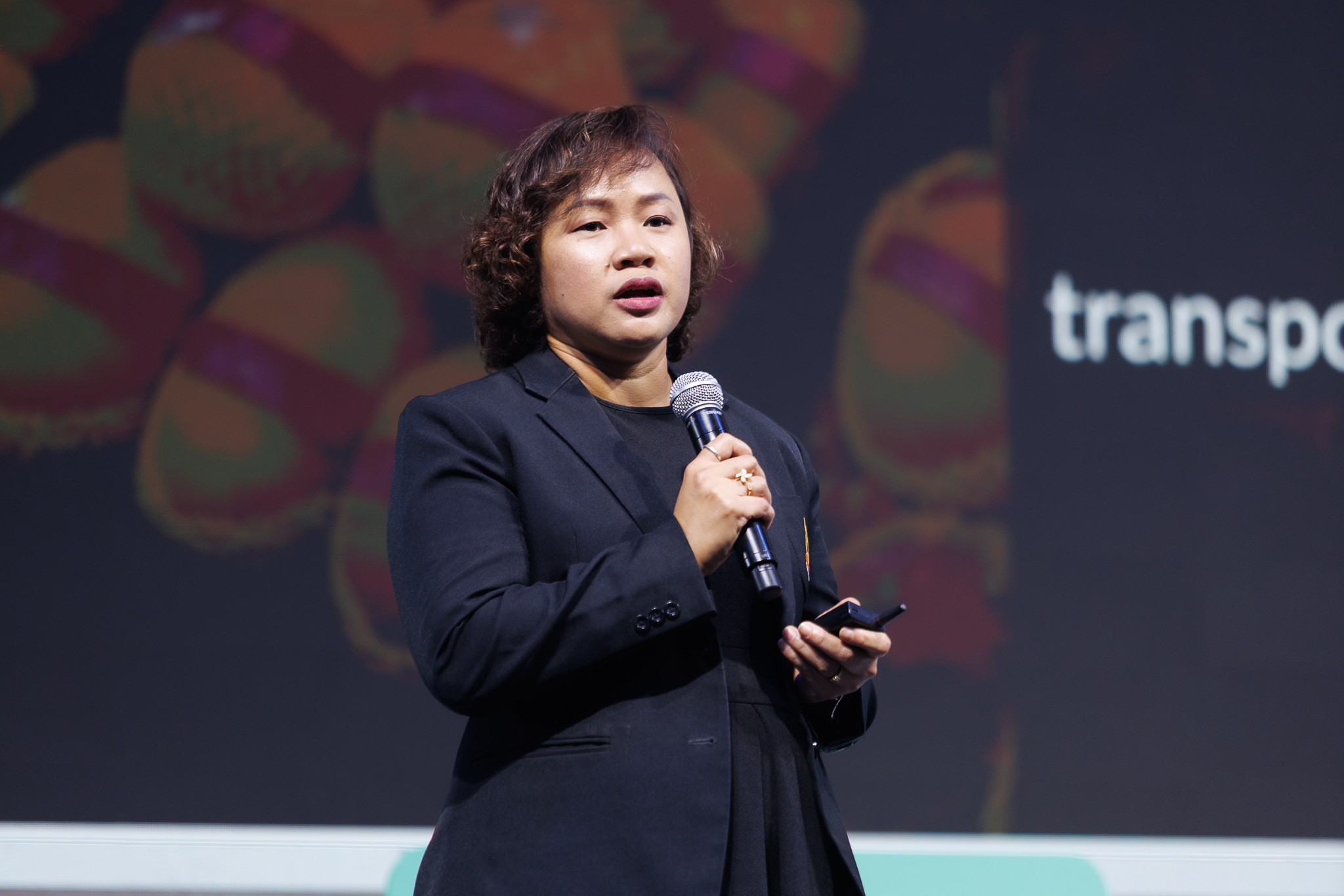
PETROMAT and HubSustainMat also developed the “Every Day CO₂ Challenge” card game, an educational tool that introduces the concept of Life Cycle Assessment (LCA) through interactive gameplay, making sustainability concepts more accessible to wider audiences.
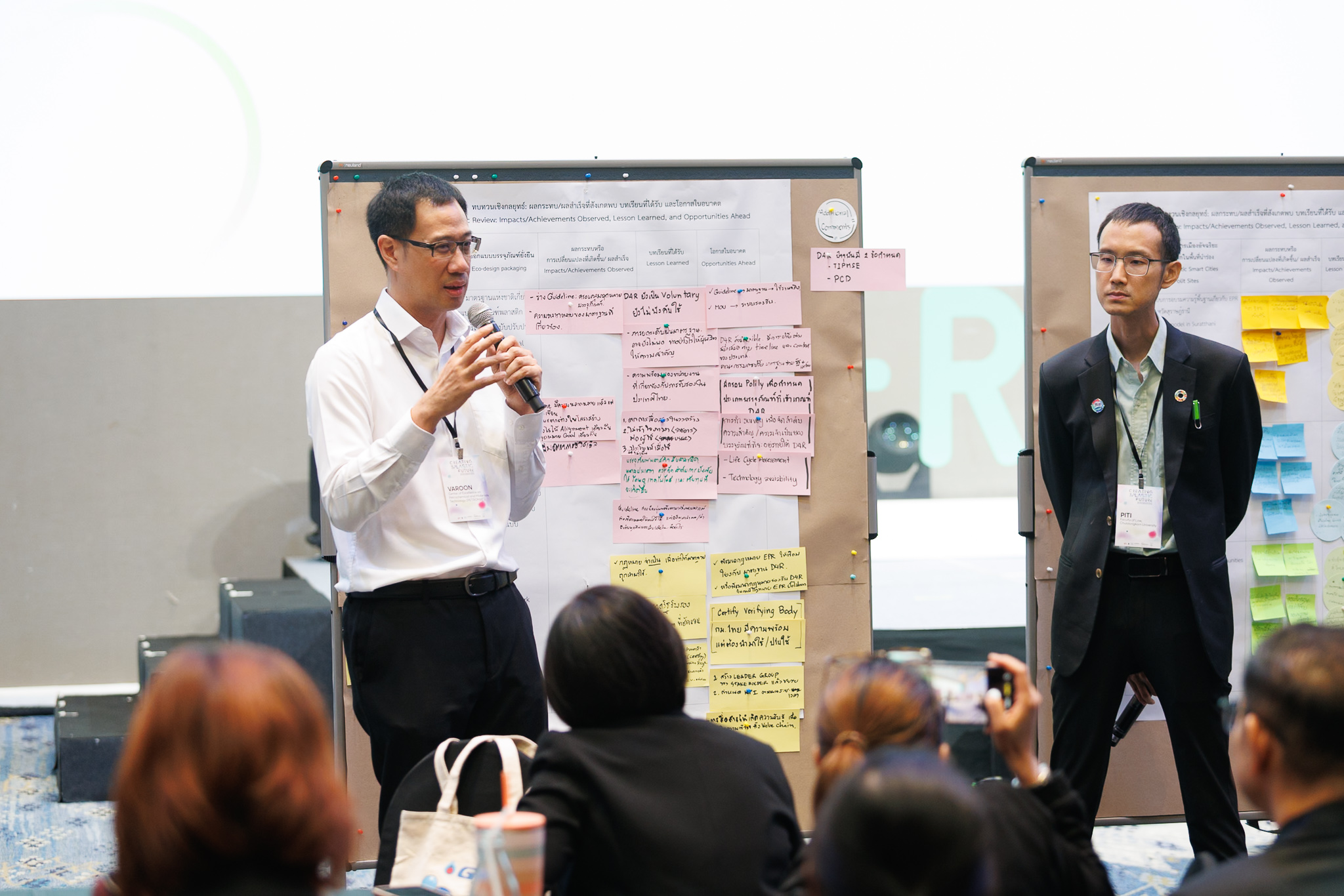
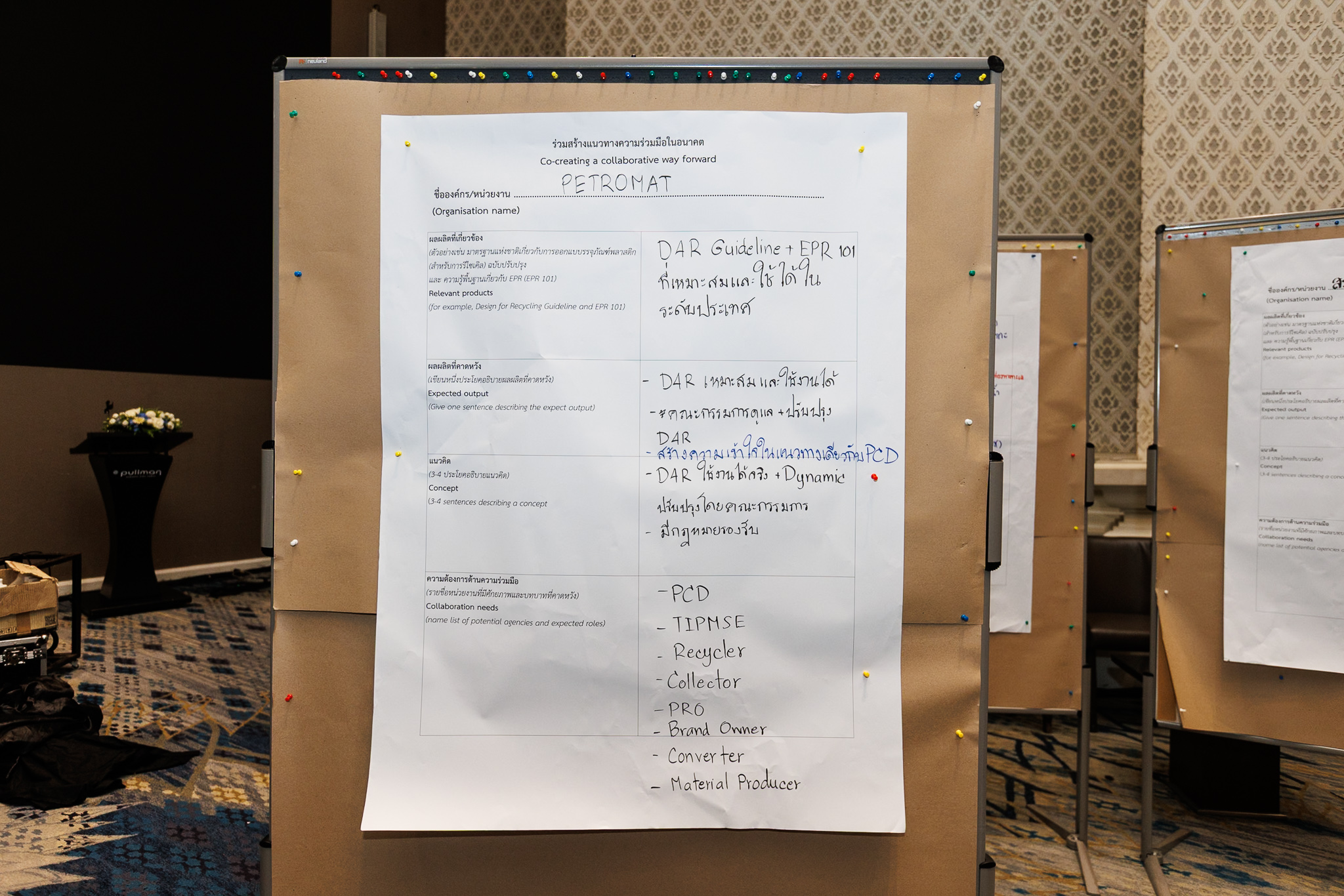
Beyond fostering knowledge exchange and innovation, the MA-RE-DESIGN project also contributed to broader efforts supporting Thailand’s transition toward sustainable packaging. Its outcomes have informed ongoing national initiatives, including the development of the draft Sustainable Packaging Management Act, while laying the foundation for continued progress toward a circular economy.

 02 2184141-2
 petromat@chula.ac.th